Tile installation
Bathroom floors and walls, showers, kitchen backsplashes and entry floors — set flat and level on a substrate that's ready for it, with straight, even grout lines.
Where the work happens
Most of our tile work is wet rooms and kitchens. Each comes with its own prep, and prep is where a tile job is won or lost.
- Bathroom floors and walls. Old floor up, subfloor checked and stiffened if it flexes, cement backer board down before any tile is set. Wall tile gets a flat, plumb surface first — in a rowhome that often means fixing the plaster behind it.
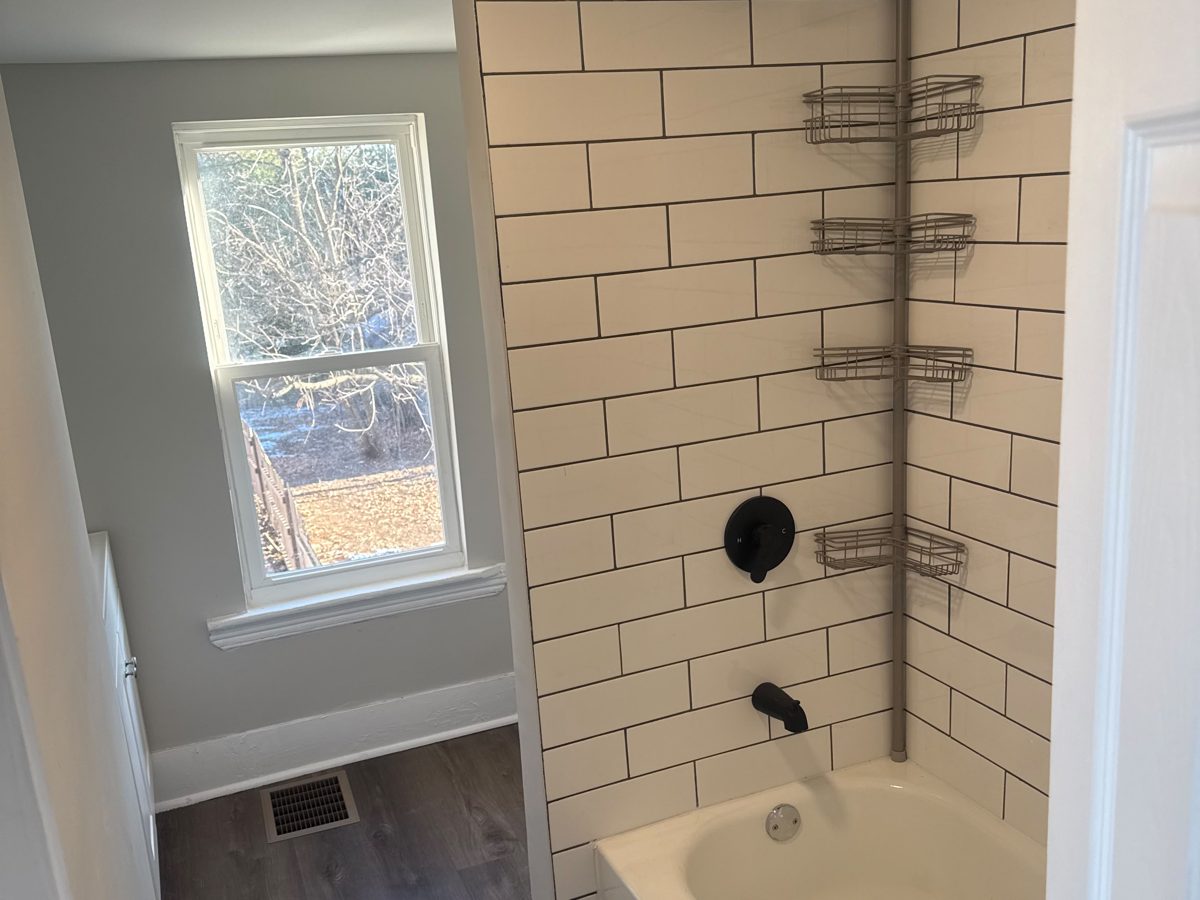
- Showers and tub surrounds. Cement backer board, a waterproofing membrane behind or over it, sealed seams and corners, and a properly sloped floor on a tiled pan. Water that gets past the tile has to have nowhere to go.
- Kitchen backsplashes. A one- or two-day job that changes the room. We plan the layout around outlets and the hood so cuts land where you won't notice them.
- Entry floors and mudrooms. Porcelain or stone that shrugs off wet boots and road salt, with clean transitions to the neighboring floor.
Tile types, honestly
We install whatever you pick, but each material asks something different of the installer and your budget.
- Ceramic. Most affordable, easiest to cut. Fine for walls, backsplashes and light-traffic floors. Softer than porcelain, so not our first choice in an entryway.
- Porcelain. Denser, harder, less porous — the right call for floors, showers and anything wet. Costs more and takes longer to cut, especially in large sizes, and that shows in the labor line.
- Natural stone. Marble, slate, travertine, granite. Beautiful but variable: every piece differs, edges chip, and it needs sealing before grouting and periodically after. Higher material and labor cost, more upkeep.
- Glass mosaic. Comes on mesh sheets, but it demands a perfectly flat, white-thinset substrate because the glass shows what's behind it. Great in a backsplash or shower niche; slow on a large wall.
Layouts and large-format tile
Straight, offset (a one-third stagger on anything over 12 inches, so lippage doesn't show) and herringbone are the patterns we set most. Herringbone and diagonal layouts add cutting time and waste — figure roughly 15% extra tile instead of 10%.
Large-format tile — 12×24, 24×24, plank tile — needs a flatter substrate than the old 4×4s ever did; a floor out by an eighth of an inch over ten feet will show as lippage. Because drywall and finishing is our core trade, flattening the wall or leveling the floor isn't a subcontract: we skim, patch or pour self-leveler before we set a single tile, and it's its own line on the estimate.
Demo, grout and sealing
We remove the old tile, surround or flooring, bag it and haul it away, and chip old mortar back to sound material. Tile cures at least overnight before grouting. We use sanded or unsanded grout to suit the joint, caulk (not grout) at every change of plane — corners, tub lines, countertop edges — so it can move without cracking, and seal the grout and any natural stone. You'll get a short list of what to keep off the tile for the first few days.
What we need from you
A tile choice, and a decision on who buys it. Many clients pick tile at a showroom or big-box store and have it delivered — we'll give you square footage plus waste so you order once. Or we source it and itemize it on the estimate. Either way, it needs to be on site before we start. Grout color, edge trim (metal profile or bullnose) and niche or shelf locations are the other small decisions we'll walk through at the site visit.
What's included
- Demo and disposal of old tile or surround
- Subfloor and wall check, backer board
- Waterproofing membrane in wet areas
- Skim, patch or self-leveler where needed
- Layout planned with you before setting
- Setting, grout, caulk at changes of plane
- Sealing of grout and natural stone
- Floors protected, daily cleanup, debris hauled
Good to know
- Free site visit, itemized written estimate
- 25% deposit, balance on completion
- 1-year workmanship warranty
- $1,000,000 general liability insurance
Tile questions we get
Can you tile over my existing tile?
Sometimes on a floor, if the old tile is solidly bonded and the extra height doesn't fight the door or toilet flange. Almost never in a shower, because you can't verify the waterproofing behind it. Most of the time removal is the honest answer.
How long does a bathroom take?
A backsplash is usually a day plus a return for grout. A tub surround or shower runs about a week including demo, backer board, waterproofing, cure time, grouting and sealing. Cure times aren't padding — thinset and membranes need their hours, and we won't grout or run water early.
Do you do the plumbing too?
Everything tile-side: demo, prep, waterproofing, setting, grouting, re-setting the toilet. Moving a drain or replacing a shower valve is a licensed plumber's work — we coordinate with yours or bring in one we trust, as a separate line on the estimate.
Price your tile job
Enter the room size for a ballpark, or book a free visit for an itemized quote with prep, materials and labor broken out.