Drywall installation
Hang, tape and finish for new construction, additions, remodels, garages and basements across Philadelphia and the near suburbs. Straight walls, tight seams, and a finish level you choose on purpose.
Any room, the right board
New builds and additions, remodels where a kitchen, bath or bedroom has been opened up, garages that need fire-rated board against the house, basements going from bare block to living space. We match the board to the room and say why on the estimate:
- 1/2" standard — walls and ceilings in living areas.
- 5/8" Type X fire-rated — garage walls shared with the house, utility rooms, anywhere code asks for it.
- Moisture-resistant — bathrooms, laundry and basement walls (cement board behind tile).
- Soundproof board — bedrooms against a rowhome party wall, offices, media rooms.
Corners get metal or paper-faced bead, set straight so trim sits flat. Ceilings go up first, strapped where joists are out of plane. High ceilings and stairwells: we bring lifts and staging, and those seams get the same finish as the wall at eye height.
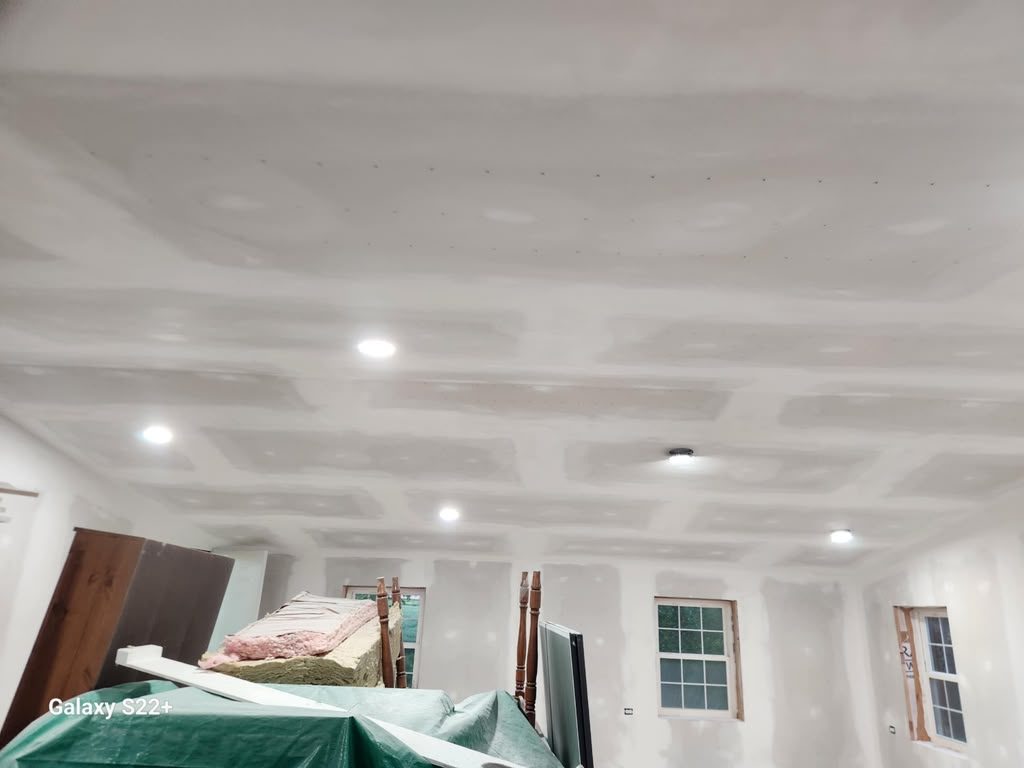
Finish levels, explained plainly
"Level" is the trade's word for how much mud goes on and how smooth the wall ends up. Higher is not always better — it depends on the light and the paint.
Level 3 — for texture
Tape embedded, two coats over seams and screws, light sand. For walls getting a heavy texture or thick wallcovering that hides seams anyway.
Level 4 — standard paint-ready
Three coats over seams and corners, screws spotted, fully sanded, ready for primer. The normal finish for flat or eggshell paint. Most jobs are Level 4.
Level 5 — skim for critical light
Level 4 plus a thin skim coat over the entire surface. For glossy or dark paint, long walls lit from one end, ceilings under raking light. Seams disappear.
How the job runs
Drywall is mostly waiting for mud to dry. You get the day count up front and a text the evening before every visit.
Hang day
Board delivered, ceilings first, then walls, corner bead set. A room or two hangs in a day.
Three coats of mud
Tape coat, fill coat, finish coat — one per day, each dried before the next. Level 5 adds a skim day.
Sand
Sanded under work lights, checked with a raking light. The dusty step, and the one we control hardest.
Walkthrough
You walk it with the owner. Anything you can see, we fix before we call it done. Balance is due after.
Sheet math, and what's in the estimate
We measure every wall and ceiling, convert to sheets, and count with 10% waste for cuts around windows, doors and boxes. You can supply the boards, or we supply everything — board, tape, compound, bead, screws, delivery — as its own line.
Included
- Materials, or labor-only if you supply board
- Hanging, taping and finishing to the level you chose
- Protection, dust control, daily cleanup, scrap haul-away
Priced separately
- Framing, insulation and vapor barrier — quoted with the framing or the basement
- Primer and paint — we paint too, quoted per room
- Removing old drywall or plaster (or skim coating if the plaster can be saved)
- Electrical, plumbing and permits
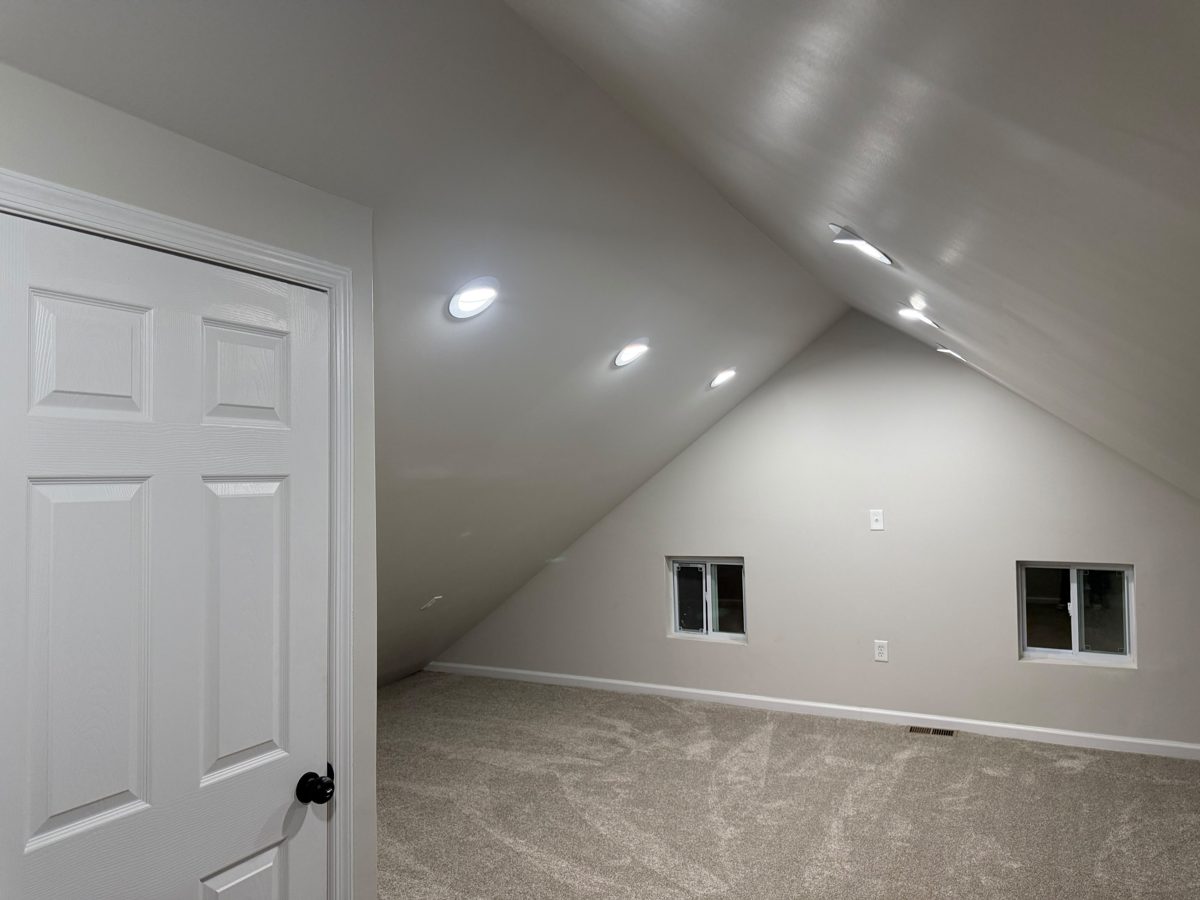
Three ways to buy it
Itemized by service level, so you can stop where your budget stops.
| Service level | What you get | Best for |
|---|---|---|
| Hang only | Board hung, screwed and beaded. No mud. | You or another finisher taping |
| Hang & tape | Hung, taped and coated to Level 3 or 4, sanded. | Ready for your painter |
| Paint-ready | Level 4 or 5 finish, primed and painted by us. | One crew, one schedule |
Drywall installation FAQ
How long does a drywall job take?
Hang day, three drying days for mud, then a sanding day — about a week for a room or two, longer for a whole floor or Level 5. You get a start and finish date in writing.
Can we live in the house while you work?
Yes, on most jobs. The work area is sealed with zip walls and we keep a clear path to the rooms you use. Rooms under drywall are out for the week; the rest of the house stays normal.
Do you paint too?
We do. Choose paint-ready and the same crew primes and paints after you approve the finish. See painting.
What is the difference between Level 4 and Level 5?
Level 4 finishes seams, corners and screws and leaves the field of the board bare. Level 5 adds a thin skim over the whole surface so paper and seams read the same under paint. Under raking light or glossy paint, Level 4 can show seam shadows; Level 5 will not.
Do you remove old drywall or plaster first?
Yes, as its own line: strip, bag, haul, check the framing. If your plaster is sound, skim coating over it is often cheaper and cleaner than tearing it out — we will tell you which we would do in our own house.
Price it in two minutes, or have us look
A ballpark by room from the estimator, or a free site visit and an itemized quote you sign online. We reply within one business day.